Why Choose Bath Windows for Your Bathroom?
A bathroom window can do more than frame a view. It can bring daylight to a tiled shower, offer a quick route for fresh air, and make a small room feel less enclosed. But privacy, moisture, and energy loss deserve equal attention. The right choice depends on the room, not just the look.
The U.S. Department of Energy reports that windows account for about 25–30% of residential heating and cooling energy use. That figure makes glazing and proper installation worth considering, especially in a bathroom used daily. The EPA advises keeping indoor relative humidity below 60%, ideally between 30% and 50%, to help limit mold growth. A window may support ventilation, but it cannot replace a suitable exhaust fan. That distinction is easy to overlook.
Building scientist Joseph Lstiburek’s reminder, “A house is a system,” offers a useful way to assess bath windows. Consider how the opening works with the fan, exterior wall, and privacy needs. Frosted glass can soften views while preserving daylight; an operable sash can help release steam after a hot shower. Still, neither choice solves every moisture problem. Drafts, awkward reach, and neglected seals can turn a promising upgrade into a nuisance. The details matter. A well-chosen bath window can improve comfort and light, provided it fits the room’s ventilation and maintenance needs.
What Defines a Bathroom Window and Its Core Functions?
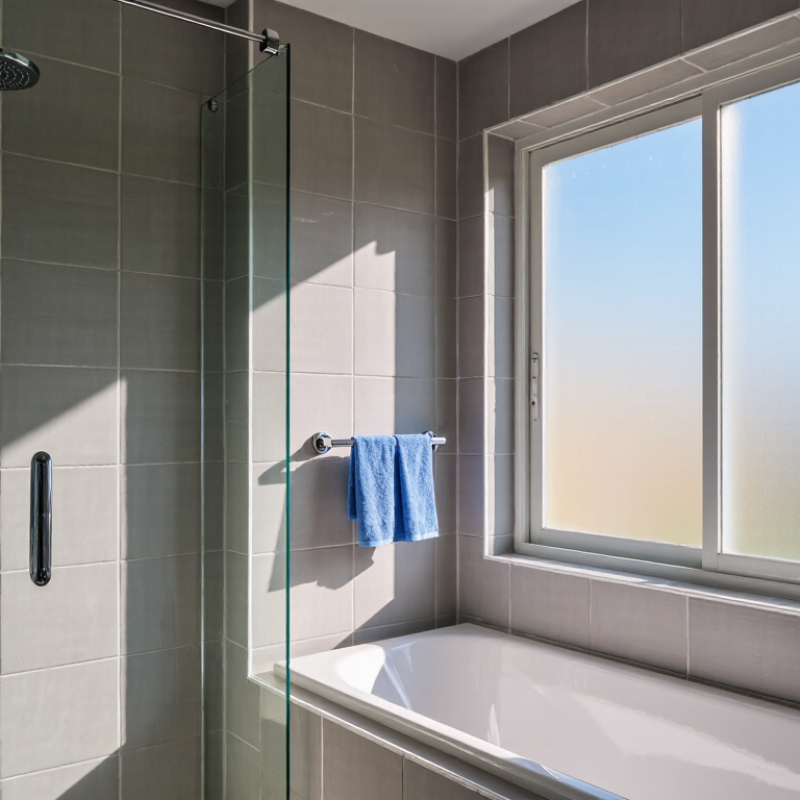
A bathroom window is a glazed opening in an exterior wall or roof, designed to bring daylight into a room where steam, splashes, and privacy all matter. Its core functions are practical: illuminate the basin and shower, provide an outdoor view, and, if operable, support natural ventilation. A frosted pane can soften direct views while still admitting light. Placement matters too; a high window may preserve privacy, but can be harder to reach and clean.
Ventilation needs careful thought. Opening a window can help clear humid air, yet it depends on weather and airflow, so it should not be treated as a guaranteed substitute for mechanical extraction. The U.S. Environmental Protection Agency advises keeping indoor humidity below 60%, ideally between 30% and 50%, to reduce conditions that encourage mold. A window can assist, but it cannot control moisture on its own. Still, calling it a cure for dampness would be too generous.
Energy performance is another part of the definition. The U.S. Department of Energy’s Energy Saver guidance estimates that windows account for 25%–30% of residential heating and cooling energy use. That figure covers homes overall, not bathrooms alone, but it shows why glazing and frame quality deserve attention. In a small bathroom, a compact, appropriately placed window may be enough. Bigger is not always better.
How Do Glazing Types Balance Privacy, Safety, and Daylight?
Bathroom glazing has to manage three competing needs: privacy, safe breakage, and useful daylight. Obscure or patterned glass blurs views while still admitting light; its texture matters. Stand outside the bathroom at night and check how clearly a person’s silhouette shows. Frosted glass can soften outlines, but it may not conceal them completely.
For a low window near a bath or shower, consider safety glazing. Tempered glass is designed to break into smaller pieces, while laminated glass holds fragments between bonded layers. Neither type automatically provides privacy, so pair safety glass with an obscure finish or a suitable covering. Check local building requirements before choosing; the details can depend on window location.
Daylight performance deserves a closer look. The National Fenestration Rating Council label reports visible transmittance, alongside energy measures such as U-factor and solar heat gain coefficient. Higher visible transmittance generally means more daylight, though a bright pane can also expose silhouettes after dark. The U.S. Department of Energy’s Energy Saver guidance estimates that heat gain and loss through windows account for 25–30% of residential heating and cooling energy use. That figure is not bathroom-specific, but it shows why glazing choice affects more than appearance. There is no perfect pane. Test samples in the actual room, at morning and evening; bathroom lighting can change the result.
What Ventilation Does a Bathroom Need? ASHRAE Cites 50 CFM Intermittent
Why Choose Bath Windows for Your Bathroom?
A bath window brings daylight and can release steam, but it should not be the room’s only moisture-control plan. ASHRAE Standard 62.2-2022 lists 50 cubic feet per minute (CFM) for intermittent bathroom exhaust, or 20 CFM for continuous operation. These are local exhaust rates; applicable codes and actual fan performance still matter. A cracked sash is not a dependable substitute, especially on still, humid days.
A properly ducted exhaust fan helps remove moisture at its source. The U.S. Environmental Protection Agency’s mold guidance recommends keeping indoor relative humidity below 60%, ideally between 30% and 50%. If the mirror remains foggy long after a shower, ventilation may be inadequate. That is a useful clue, not a measurement. Window opening habits and outdoor weather can make results inconsistent.
Tips: Run the fan during showers and afterward, and confirm it exhausts outdoors. Keep the window frame dry and check for condensation around the sill. If airflow seems weak, have the fan’s performance checked rather than relying on sound alone.
How Can Window Choices Help Keep Indoor Humidity Near EPA’s 30–50% Range?
A bathroom window can help manage humidity, but it works best as part of a ventilation plan. The EPA recommends keeping indoor relative humidity between 30% and 50%. After a hot shower, moisture can cling to the mirror, grout, and cool window glass. Opening a window may let some damp air escape, especially when outdoor conditions are dry.
A small opening can make a difference. Let the window stay open during and after bathing, when weather and privacy allow. Pair it with an exhaust fan that vents outdoors, and keep the bathroom door slightly open afterward. Give the room time to dry. A basic hygrometer on a shelf can show whether humidity returns toward the recommended range. Read it after showers, not just during a dry afternoon.
A window is not a cure-all. On humid or rainy days, outdoor air may add moisture instead of removing it. In cold weather, prolonged opening can chill surfaces and encourage condensation. I used to assume a foggy pane meant the room only needed more fresh air; it can also signal cold glass or weak airflow. Wipe standing water, check that the fan moves air, and watch for recurring damp patches. Small habits help, though they are easy to forget.
Why Choose Bath Windows for Your Bathroom? - How Can Window Choices Help Keep Indoor Humidity Near EPA’s 30–50% Range?
The U.S. Environmental Protection Agency recommends keeping indoor relative humidity around 30–50% when practical. A bathroom window can support ventilation when outdoor conditions are suitable, but it does not replace a properly sized, vented exhaust fan.
| Window choice or feature |
How it can help manage moisture |
Privacy and comfort |
Practical considerations |
| Operable awning window |
Can provide natural ventilation when opened; its outward-opening sash may allow ventilation during light rain, depending on exposure and installation. |
Can be placed higher on a wall to admit daylight while limiting direct sightlines. |
Use the exhaust fan during and after showers as needed. Close the window when outdoor air is humid, polluted, or uncomfortable. |
| Operable casement window |
Opens wide for natural airflow when weather and outdoor air quality are suitable. |
Can bring in daylight and fresh air; suitable window coverings can improve privacy. |
Check that the sash will not obstruct walkways or fixtures. A window alone may not remove shower moisture quickly enough. |
| Fixed or non-opening window |
Does not provide ventilation, but daylight may make the room more comfortable. Moisture removal depends on mechanical ventilation and other air exchange. |
Can provide daylight while maintaining privacy when placed high or fitted with suitable glazing. |
Pair with an effective exhaust fan that discharges outdoors, not into an attic or another enclosed space. |
| Privacy glazing or high placement |
Does not directly lower humidity, but can make it easier to use an operable window for ventilation without sacrificing privacy. |
Diffuses or limits views while allowing natural light, depending on the glazing and window position. |
Confirm that the chosen glazing still provides the desired level of privacy at night when interior lights are on. |
| Well-sealed, insulated window |
Helps reduce drafts and cold interior surfaces. Warmer interior glass may reduce condensation risk, although it cannot prevent condensation in every condition. |
Can improve comfort near the window, especially during cold weather. |
Use appropriate bathroom-rated materials and maintain seals. Wipe away persistent condensation and investigate recurring moisture. |
| Window plus exhaust fan |
Combines optional natural ventilation with mechanical moisture removal. The fan is the more dependable control when outdoor air is unsuitable. |
Supports a brighter room while allowing the fan to handle moisture during showers. |
Run the fan during bathing and afterward, following its instructions and applicable local requirements. Verify that it vents outdoors. |
Practical check: A basic hygrometer can help track indoor relative humidity. If readings regularly remain above the EPA’s 30–50% range, improve moisture control by checking exhaust ventilation, repairing leaks, and addressing other moisture sources. Results vary with weather, room layout, and ventilation performance.
How Does Window Efficiency Matter When Windows Account for 25–30% of Home Heating and Cooling Energy Use?
Why Choose Bath Windows for Your Bathroom?
How Does Window Efficiency Matter When Windows Account for 25–30% of Home Heating and Cooling Energy Use?
A bathroom window brings daylight into a space that often feels small and enclosed. Yet its energy performance matters too. The U.S. Department of Energy’s Energy Saver guidance estimates that heat gain and heat loss through windows account for 25–30% of residential heating and cooling energy use. That figure describes homes overall, not every bathroom or climate.
Check a window’s U-factor, which indicates how readily heat escapes, and its solar heat gain coefficient, which measures admitted solar heat. Lower values are not always better for every home; climate, orientation, and shade matter. In a humid bathroom, choose glazing suited to the local conditions, and keep ventilation working. A window alone cannot control moisture. I’ve seen how a fogged pane can linger after a shower, even when the room has a fan.
Tips: Compare rated performance, not just frame material. Consider privacy glass or a high window for daylight without direct views. Check for condensation around the frame after showers; it may signal a ventilation or installation issue, though one observation is not a diagnosis.