
7 Tips for Choosing French Doors with Windows Switch to ADA Accessible Theme My windows protect me from: Triple digit heat and Disruptive noise.
Close Menu

Blog

7 Tips for Choosing French Doors with Windows

French doors with windows can make a room feel brighter and more connected to a patio, but glass also changes comfort, privacy, and energy performance. The U.S. Department of Energy estimates that heat gain and heat loss through windows account for about 25%–30% of residential heating and cooling energy use. That figure is a useful warning, not a prediction for every home; climate, orientation, installation, and glass specifications all matter. Small details matter.

Building scientist Joseph Lstiburek has framed the challenge bluntly: “Windows are holes in the wall.” The line is memorable because a glazed door must balance daylight and views with insulation, weather protection, and secure hardware. The National Fenestration Rating Council’s labels help shoppers compare rated products, including U-factor and solar heat gain coefficient (SHGC). Those numbers are more useful than relying on glass appearance alone, though they do not guarantee a good installation.

This guide explores seven practical considerations when choosing french doors with windows: configuration, glazing, energy ratings, frame material, security, maintenance, and professional installation. Look closely at how afternoon sun reaches the doorway, whether neighbors can see inside, and how much clearance the panels need to swing. A beautiful showroom sample may behave differently in a drafty older opening. Measure carefully, check local climate needs, and ask installers how they manage flashing and air sealing. A little skepticism helps. The right choice is not always the largest glass area; it is the one that suits the home’s light, layout, and daily use.
7 Tips for Choosing French Doors with Windows

Understanding French Doors with Windows and Their Main Features

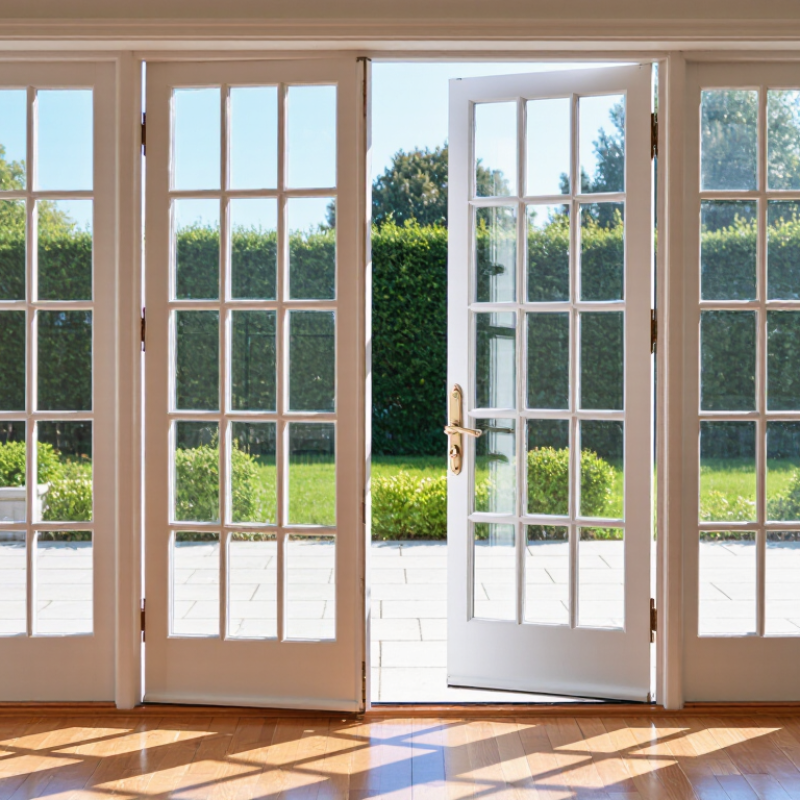
French doors with windows pair two hinged panels with glazed sections, bringing daylight into rooms while creating a wider passage when both doors open. Their defining features include glass area, frame material, opening direction, and the number of panes. A large glass area can brighten a dim hallway, but it may also reduce privacy and increase heat transfer. Details matter.

Glass performance is worth checking before choosing a style. The U.S. Department of Energy estimates that windows account for 25%–30% of residential heating and cooling energy use; that figure is not specific to French doors, but it shows why glazing deserves attention. Look for the National Fenestration Rating Council label: its U-factor indicates heat flow, while its Solar Heat Gain Coefficient shows how much solar heat passes through. Lower numbers are not automatically best for every climate. A sunny north-facing room and a shaded south-facing room have different needs. Check the actual exposure.

The frame and hardware shape everyday use, too. Wood offers a warm, painted finish, while fiberglass and metal-clad options can call for less routine upkeep. Measure the swing path: a door opening into a narrow dining area can bump a chair. Awkward, but easy to overlook. I’d also inspect the threshold and weather seals, since a beautiful glass panel is less useful if drafts gather around its edges.

7 Tips for Choosing French Doors with Windows - Understanding French Doors with Windows and Their Main Features
Tip Feature to Compare Common Options and Details Why It Matters
1 Door configuration Many French doors use two hinged leaves, with one or both leaves operable. Some French-style designs use a sliding configuration. Check the available swing or sliding space, traffic flow, and the width of the opening you need for everyday use.
2 Glass type and layout Glass may fill most of each door leaf or be divided into smaller panes by grilles. Options can include clear, obscure, laminated, or tempered glass. Choose a layout that balances daylight, privacy, appearance, and the safety-glazing requirements that apply to your location.
3 Energy performance Compare the whole-unit U-factor and solar heat gain coefficient (SHGC). Insulated glazing, Low-E coatings, and gas-filled units are available on some models. A lower U-factor generally indicates less heat transfer. The suitable SHGC depends on climate, orientation, and shading.
4 Frame material Common frame materials include wood, fiberglass, vinyl, and aluminum; construction and finishes vary by product. Compare appearance, insulation, weather resistance, maintenance needs, and suitability for your local conditions.
5 Weather sealing and threshold Look for perimeter weatherstripping, a well-fitted meeting point between the leaves, and a threshold suited to the installation. Good fit and correct installation help limit drafts and water entry. Exterior doors need appropriate drainage and flashing details.
6 Locks and hardware Depending on the design, hardware may include a deadbolt, multipoint locking, flush bolts for the inactive leaf, and keyed or non-keyed handles. Make sure both leaves secure properly and that the hardware is compatible with the door, frame, and your security needs.
7 Measurements and installation Measure the rough opening, check the floor level and surrounding wall conditions, and confirm whether the unit is supplied as a prehung assembly. Accurate measurements and careful installation help the doors align, latch, and operate smoothly. Follow the product instructions and applicable building codes.

Assessing Your Space, Door Size, and Opening Direction

Tip
Start with the opening, not the catalog. Measure its width at the top, middle, and bottom, then check the height on both sides. Older frames may be slightly out of square. Record the trim-to-trim space and the clear opening separately. French doors with windows need room for casing, handles, and comfortable passage. A 60-inch opening may provide less usable width after installation. Check flooring too. A thick rug or raised threshold can catch the door.

Tip
Match the door size to everyday traffic. For an existing frame, confirm its actual dimensions before ordering; stated sizes may not match rough openings. If replacing the frame, allow space for shims and leveling, using the installation guide or advice from a qualified installer. Glass panels bring in daylight, but larger door leaves need sturdy hinges and enough wall clearance. Measure twice. Even careful measurements can miss quirks in older homes, so confirm the frame before making a final choice.

Tip
Decide the opening direction with furniture in place. Mark the door’s swing on the floor with tape, then check nearby cabinets, radiators, and walkways. In a narrow room, an outward swing can preserve floor space, but consider porch space and weather exposure. Inward swings may better suit other layouts. Stand where you will approach the doors. Does a handle meet a chair? That small clash is easy to overlook.

Choosing Frame Materials, Glass Types, and Energy Performance

Tip 1: Choose a frame for your climate and maintenance habits. Wood offers a warm, traditional look, but exposed edges need regular sealing or painting. Fiberglass resists moisture and temperature swings, while vinyl is generally low-maintenance. Aluminum is strong and slim, though its thermal performance depends on the design. No material wins everywhere; the trade-offs are less tidy than many buying guides suggest.

Tip 2: Match the glass to the room. Low-emissivity coatings can reduce heat transfer, while double-pane glass usually insulates better than single-pane glass. In a sunny room, compare the solar heat gain coefficient, or SHGC, to limit unwanted heat. In colder areas, check the U-factor; lower values indicate less heat loss. Clear glass brightens a dim entry, but it may offer less privacy. A textured or obscured pane can help. Check the details.

Tip 3: Look beyond the glass rating. A well-insulated door can still feel drafty if the frame, threshold, or weatherstripping is poorly fitted. Ask for documented energy ratings, and compare products suited to your local conditions. Check that the installer measures the opening carefully; even a small gap can undermine comfort. I would not judge performance by glass alone. The frame and installation matter, too.

Comparing Styles, Hardware, Security, and Privacy Options

French doors can make a narrow room feel brighter, but style affects comfort and privacy. Full-lite designs admit more daylight; divided lites add visual structure and can suit older homes. Measure the opening, including trim, before comparing configurations. Measure twice. Check whether the active panel opens inward or outward, and confirm that furniture, steps, or walkways will not obstruct it. The U.S. Department of Energy’s Energy Saver guidance estimates that window heat gain and loss account for 25–30% of residential heating and cooling energy use. That national estimate is not a prediction for every home, but it makes glass performance worth checking. Compare National Fenestration Rating Council (NFRC) labels for U-factor and solar heat gain coefficient, rather than judging efficiency by appearance alone.

Hardware deserves a hands-on check. Ask how the inactive panel secures at the top and bottom, and whether the lock engages smoothly without lifting the door. A multipoint lock can secure several points along the frame, but installation and frame alignment still matter. For privacy, consider frosted or patterned glass in bathrooms and street-facing rooms; curtains or blinds offer adjustable coverage elsewhere. Laminated glass may help hold fragments together if broken, though it is not a guarantee against entry. Privacy is personal. One detail is easy to overlook: decorative grilles can complicate cleaning, and I would reconsider them if the doors face a dusty patio.

Planning Installation, Care, and Long-Term Maintenance

Tip 1: Measure the opening at several points before ordering French doors with windows. Older frames can be slightly out of square. Check the floor, jambs, and head for uneven surfaces, and leave installation clearances recommended by a qualified installer. A careful measurement now can prevent a door that binds later.

Tip 2: Plan for light, privacy, and weather. Larger glass panes brighten a hallway, but they may expose rooms after dark. Consider curtains or suitable glazing, and check how the door faces prevailing rain and direct sun. During installation, confirm that flashing and perimeter seals direct water away from the frame. Small gaps matter.

Tip 3: Set aside time for routine care. Clean glass with a soft cloth, and avoid abrasive tools that can scratch it. Inspect hinges, locks, weatherstripping, and the sill twice a year; clear leaves and grit from the track. Tighten loose hardware carefully, but do not force a stiff latch. That can mask a bigger alignment issue. I would not assume all seals last equally long; inspect them instead of waiting for a draft. Keep the care instructions and installation details somewhere easy to find, especially if repairs are needed later.

French Doors with Windows: Suggested Maintenance Intervals

A practical planning guide for routine care. Intervals are general suggestions and may vary with climate, exposure, and door materials.

Use these checks alongside the door manufacturer’s care instructions. Inspect more often after severe weather or if you notice drafts, sticking, or water buildup.

*$250 Off/Window $500 Off/Door. Minimum of 4 Windows. Max savings not to exceed $2,500. Must present coupon at time of estimate. Some restrictions apply. Cannot be combined with any other offers. Call or see the website for details. www.mpwindowsanddoors.com. Offer Expires 9/30/25. CSLB# 778326. 100% Employee Owned.

Contractor's License CSLB #778326.