2026 Best American Home Windows for Global Buyers
Choosing the right American home windows is not simply a style decision. It is a performance decision.
Global buyers face different weather, construction standards, and installation practices. A window that performs well in Minnesota may struggle in a humid coastal city. Strong sunlight, driving rain, dust, and sudden temperature changes all matter. So do shipping limits and local installer experience.
Building-science consultant Steve Baczek has described a window as “a hole in the wall.” That short sentence carries serious meaning. Glass, frames, seals, and flashing must work together. A premium product can still fail when installation is careless.
This guide examines 2026 American home windows through practical details. We consider U-factor, solar heat gain coefficient, air leakage, visible light, frame materials, glazing options, and warranty support. NFRC ratings can help buyers compare products more fairly. Regional testing and local building requirements remain important, too.
Look closely.
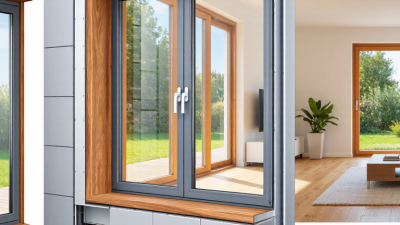
Vinyl may offer value and low maintenance. Fiberglass can provide strength with limited expansion. Wood creates warmth, but it needs disciplined protection. Aluminum suits some modern designs, yet thermal performance requires careful evaluation.
There is no universal winner. That is the uncomfortable part.
Our recommendations focus on verifiable specifications, manufacturer reputation, replacement support, and installation realities. We also recognize a limitation: product availability changes across countries, and published performance may not reflect every climate. Buyers should request current documentation before ordering.
The best American home windows are not merely attractive. They should reduce discomfort, manage energy, resist weather, and remain serviceable for years. This introduction sets a practical path for comparing leading options with clearer expectations.
2026 U.S. Window Basics: DOE Links Windows to 25–30% of Home Energy Use
2026 Best American Home Windows for Global Buyers
The U.S. Department of Energy estimates that windows can influence 25–30% of a home’s energy use. Heat enters through glass in summer and escapes during winter. That loss is visible near a cold window frame, where curtains may move slightly with air leakage. DOE guidance therefore emphasizes U-factor, solar heat gain coefficient, and installation quality. These measurements matter more than appearance alone.
A lower U-factor generally reduces heat transfer. A lower SHGC can limit unwanted solar heat in hot climates. However, the best combination depends on location, orientation, shading, and heating needs. A south-facing window in a cold region may benefit from useful winter sunlight. The same glass can overheat a room in a tropical climate. Climate-zone decisions should come before window shopping.
NFRC performance labels provide independently verified ratings for U-factor, SHGC, visible transmittance, and air leakage. The Lawrence Berkeley National Laboratory has also documented substantial energy impacts from residential window performance and replacement decisions. Still, a high-performing unit cannot repair careless installation. Gaps around the frame can weaken real-world results. This is where buyers, including overseas purchasers, should ask for tested values, installation details, and warranty terms. I would not trust a headline efficiency claim without those documents. Even careful specifications can disappoint when local installers ignore drainage, flashing, or wall movement.
NFRC Ratings Explained: Compare U-Factor, SHGC, VT, and Air Leakage
For global buyers, NFRC ratings make American home windows easier to compare under consistent testing conditions. The label lists U-Factor, SHGC, VT, and Air Leakage. Each number describes a different part of window performance.
U-Factor measures heat transfer through the window. Lower values generally mean better insulation, especially during cold winters. SHGC shows how much solar heat enters through the glass. A lower SHGC can reduce cooling demand in hot, sunny regions. In colder climates, a moderate or higher SHGC may provide useful warmth. Orientation changes everything. A west-facing window receives harsh afternoon sun, while a shaded north-facing window behaves differently.
VT, or Visible Transmittance, indicates how much natural light passes through the glass. Higher VT can brighten a room, but excessive daylight may increase glare. Air Leakage measures the amount of air passing through the window assembly. Lower values usually indicate a tighter, more comfortable window. Check the units before comparing products across countries. NFRC data uses standardized American testing, while local building rules may use different methods. A perfect rating on paper can still disappoint if installation is poor. Small gaps around the frame can create cold drafts, interior condensation, and unexpected energy loss. Those details deserve inspection.
2026 Best American Home Windows for Global Buyers - NFRC Ratings Explained: Compare U-Factor, SHGC, VT, and Air Leakage
Representative NFRC performance profiles for residential window selection
| Performance Profile |
Typical Climate or Use |
U-Factor
Btu/h·ft²·°F |
SHGC
0–1 scale |
VT
0–1 scale |
Air Leakage
cfm/ft² at 1.57 psf |
Interpretation for Buyers |
| Cold-Climate Efficiency |
Northern regions with long heating seasons |
0.20–0.30 |
0.35–0.50 |
0.45–0.65 |
≤ 0.20 |
Prioritizes low heat transfer while retaining useful winter solar gains and daylight. |
| Mixed-Climate Balance |
Areas with both meaningful heating and cooling seasons |
0.25–0.35 |
0.25–0.40 |
0.45–0.65 |
≤ 0.20 |
Balances winter insulation with control of summer solar heat, especially on east-, south-, and west-facing elevations. |
| Hot-Climate Solar Control |
Warm and cooling-dominated regions |
0.25–0.35 |
0.20–0.30 |
0.40–0.60 |
≤ 0.20 |
Uses lower SHGC to reduce unwanted solar heat gain while maintaining practical daylight levels. |
| High-Daylight Design |
Rooms where natural light is a primary objective |
0.30–0.40 |
0.35–0.55 |
0.55–0.70 |
≤ 0.20 |
Higher VT generally provides more visible daylight, but shading and orientation remain important. |
| Wind-Exposure Priority |
Coastal, high-rise, or locations with frequent strong winds |
0.25–0.35 |
0.25–0.45 |
0.40–0.60 |
≤ 0.10 |
A lower air-leakage result can improve comfort by limiting uncontrolled outdoor air movement through the assembled window. |
How to read the NFRC values:
- U-Factor: Measures the rate of heat transfer through the complete fenestration product. Lower values indicate better insulation.
- SHGC: Measures the fraction of incident solar radiation admitted through the window. Lower values reduce solar heat gain; higher values can provide useful passive heat in cold climates.
- VT: Measures the fraction of visible light transmitted through the product. Higher values generally indicate more daylight.
- Air Leakage: Measures the amount of air passing through the product under a standardized pressure difference. Lower values indicate a tighter window.
The numerical bands above are representative planning ranges based on commonly specified residential window performance. Actual NFRC ratings vary by window size, frame material, glazing package, operating type, and configuration. Compare the complete NFRC-certified product rating rather than glass-only performance.
Climate-Zone Matching: Apply ENERGY STAR v7.0 Performance Thresholds
Climate-zone matching matters more than a glossy frame. The Version 7.0 window specification sets different performance thresholds across American climate zones. In Northern zones, windows need a U-factor of 0.27 or lower. North-Central zones require 0.30 or lower. South-Central zones allow 0.30, but limit SHGC to 0.23. Southern zones require U-factor at 0.40 or lower, with SHGC at 0.23 or lower.
U-factor measures heat transfer through the window. Lower values help retain indoor warmth. SHGC measures solar heat entering the room. Lower values can reduce summer cooling demand. The U.S. Department of Energy estimates that windows influence roughly 25% to 30% of residential heating and cooling energy. The 2020 Residential Energy Consumption Survey also reports that space heating used 42% of household energy, while air conditioning used 8%. These figures explain why one window specification cannot suit every region.
Tips: Match the window to the installation location, not the seller’s broad “all-climate” claim. Check the NFRC label for U-factor, SHGC, visible transmittance, and air leakage. A common mistake is choosing very low SHGC glass in a cold, sunny room. It may reduce useful winter warmth. I would also verify orientation, shading, and installer quality, because laboratory ratings cannot fully predict a poorly sealed opening.
2026 Best American Home Windows for Global Buyers
Climate-Zone Matching Based on ENERGY STAR® Version 7.0 Performance Thresholds
The chart compares the maximum certified U-factor and the applicable solar heat gain coefficient (SHGC) threshold by U.S. climate region. Lower U-factor improves insulation. In colder regions, a higher minimum SHGC can support passive solar heat gain; in warmer regions, a lower maximum SHGC helps reduce cooling demand.
Reference: ENERGY STAR Residential Windows, Doors, and Skylights Version 7.0 criteria. SHGC values shown as applicable minimum or maximum thresholds.
Global Purchasing Checks: Verify AAMA/WDMA/CSA 101 and Local Codes
2026 Best American Home Windows for Global Buyers
Global buyers should treat window standards as a verification task, not a marketing phrase.
Ask for current test reports showing AAMA and WDMA compliance where applicable. These documents should identify the exact window series, size, glass package, and tested configuration. A certificate for one model does not automatically cover every custom size.
CSA 101 may be relevant for Canadian projects, but requirements vary by province and building type. Confirm the applicable edition with a qualified local code professional. Check air leakage, water penetration, structural pressure, thermal performance, and forced-entry requirements when required. A window that performs well in a laboratory may still fail if the installation method is unsuitable.
Local codes can change the purchase decision. Coastal sites may need higher wind-load ratings. Cold regions often demand better insulation and condensation control. In hot climates, solar heat gain and glass shading become more important.
Review the product label, technical drawings, and installation instructions before payment. Keep copies in English and the local working language if possible. The paperwork can still be incomplete. That is a warning, not a minor inconvenience. Ask the supplier to correct missing test dates, unclear ratings, or mismatched product descriptions. Then have the installer confirm rough-opening dimensions, sill drainage, flashing, and fastener requirements on site.