How to Choose the Best Fiberboard Medium Density Board?
Choosing the best Fiberboard Medium Density Board (MDF) requires careful consideration. The MDF industry has seen substantial growth. According to recent market reports, the global MDF market was valued at $30 billion in 2022, with a projected CAGR of 6.5% through 2030. This growth indicates increased interest in sustainable, high-quality materials.
Quality is paramount when selecting Fiberboard Medium Density Board. Consumers often seek boards that balance durability and affordability. Ratings and certifications, such as those from the Forest Stewardship Council (FSC), can guide your choice. Over 70% of buyers prioritize eco-friendly products, reflecting a shift towards sustainability in material selection.
However, it's crucial to recognize that not all MDF products are equal. Some may contain harmful additives, despite their appealing price. Inadequate information or lack of certification raises questions about reliability. Thus, potential buyers must conduct thorough research. Selecting the right Fiberboard Medium Density Board involves assessing both quality and environmental impact.
Understanding Medium Density Fiberboard (MDF) Properties and Uses
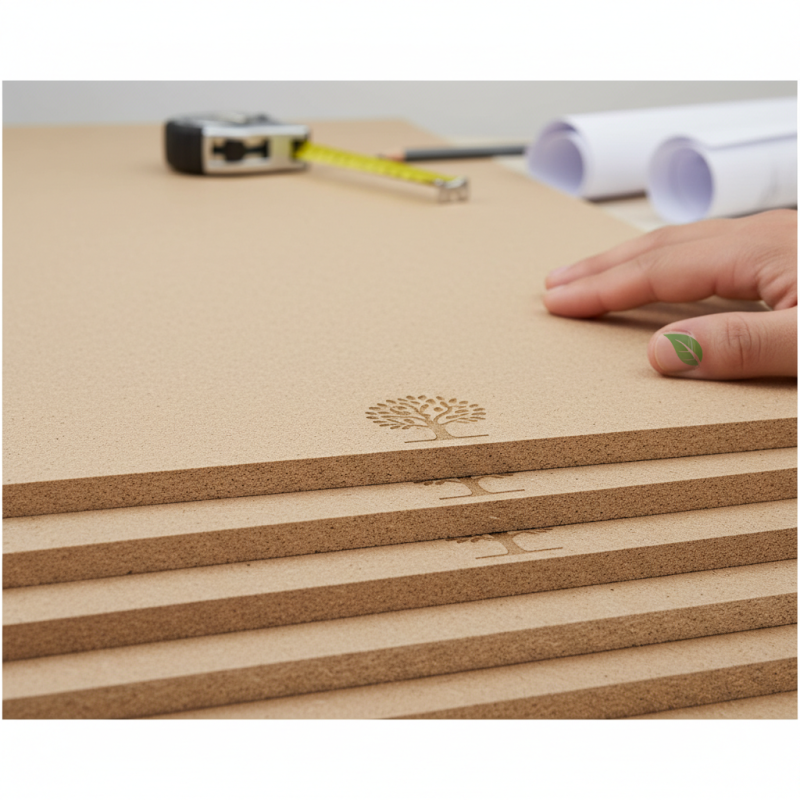
Medium Density Fiberboard (MDF) is a popular choice in construction and furniture making. It consists of wood fibers combined with adhesives under high temperature and pressure. This process results in a dense, durable material. MDF is prized for its smooth surface, which is ideal for painting and veneering. It can be easily cut, shaped, and molded, making it versatile for various applications.
MDF is commonly used in cabinetry, shelving, and decorative moldings. Its even consistency allows for precise work, which is essential for detailed projects. However, caution is needed. MDF can emit formaldehyde, especially when raw edges are exposed. It is important to seal these edges properly to minimize risks. Additionally, when working with MDF, wearing a mask is advisable due to dust during cutting.
Choosing the right MDF involves understanding its density, thickness, and finish. Heavier boards are often more durable but can be cumbersome. Thinner boards are lightweight and easier to handle. Reflecting on your project requirements will guide you in making the right choice. Don't overlook the environmental impact of MDF production and consider sustainable sources when possible.
Key Factors to Consider When Selecting MDF for Your Projects
When selecting medium density fiberboard (MDF), understanding key factors is essential. Quality and density significantly impact performance. MDF is typically classified based on its density, with standard MDF ranging from 600 to 800 kg/m³. Higher density boards usually provide enhanced durability and better machining properties. A recent industry report indicated that 55% of professionals prioritize density when choosing MDF for their projects.
Another factor is surface finish. MDF is renowned for its smooth surfaces, making it ideal for painting and veneering. However, not all finishes are equal. Advanced finishes offer moisture resistance, which can extend the board's lifespan. Make sure to assess the intended use, as some applications may require enhanced moisture resistance, especially in high-humidity environments.
Tips: Always check for certifications like CARB or EPA compliance. These indicate lower formaldehyde emissions. Also, consider the board's origin. Domestic MDF may have stricter quality controls. Lastly, don't overlook the importance of weight. Heavier boards often indicate higher density, but they can be more challenging to handle. A balanced approach will streamline your selection process.
Comparing Different MDF Grades: Which One Suits Your Needs?
When choosing medium-density fiberboard (MDF), understanding the different grades is essential. MDF is primarily categorized into standard, moisture-resistant, and fire-retardant grades. Each type has unique properties, influencing its suitability for various applications. For example, standard MDF is easy to work with and ideal for furniture. However, it may not withstand humidity or moisture.
Moisture-resistant MDF, on the other hand, offers better performance in humid environments. It is often used in kitchens and bathrooms. Its resistance to swelling makes it a reliable option.
Fire-retardant MDF is engineered for safety, with additives that slow fire spread. It’s suitable for commercial spaces where fire safety standards are crucial.
While evaluating these options, consider how you intend to use the board. Each grade comes with trade-offs. Moisture-resistant MDF may cost more but can save you from long-term damage. Fire-retardant MDF ensures safety but may sacrifice some strength. Reflect on your project's needs to make the best choice. Balancing cost, durability, and specific requirements is key to finding the right MDF for your situation.
Environmental Impact and Sustainability of Medium Density Fiberboard
When considering the environmental impact of medium density fiberboard (MDF), it's essential to explore its sustainability. MDF is made from wood fibers, which are typically sourced from recycled materials or sawmill scraps. This reduces the need for virgin wood and lowers deforestation rates. However, not all MDF is created equal. Some manufacturers may still use harmful adhesives or finishes, releasing volatile organic compounds (VOCs) into the air. Choosing products labeled as low-VOC can contribute to a healthier indoor environment.
Tip: Always seek certification labels. Look for products that meet sustainability standards, such as those from the Forest Stewardship Council (FSC). These certifications ensure the wood used is ethical and responsibly sourced.
MDF production requires considerable energy, which can elevate its carbon footprint. Some companies are exploring greener production methods, like using bio-based adhesives. Still, not every option may prioritize sustainability. Some products might be cheap but fail to meet eco-friendly standards. This inconsistency can complicate your decision-making process.
Tip: Do your research before purchasing. Understand the manufacturing processes and materials used in products to make an informed choice. A more educated purchase leads to better sustainability practices.
Cost Analysis: Finding the Best Value in MDF Products on the Market
When looking for the best medium density fiberboard (MDF), cost analysis plays a crucial role. Different MDF products are available at varying price points. It's essential to understand what you are paying for. The raw material quality, manufacturing process, and finishing can significantly affect the price. Cheap options might seem appealing, but they often compromise on durability and performance.
Comparing prices among various suppliers is vital. However, don't just focus on the number. Assess the specifications, density, and durability of the boards. Some products may offer lower prices but lack necessary certifications. Reading material safety data sheets can provide insights into quality. Engage with professionals or consumers who have experience with specific products. This can help gauge the reliability of each option.
Many consumers face regret after choosing low-cost MDF. They realize later that the board does not meet their project needs. Evaluating user reviews can help avoid such pitfalls. Investigating warranty options can also signal product reliability. A thorough cost analysis should incorporate long-term performance, not just initial investment. Balancing cost with quality can lead to better satisfaction in your projects.