

Choosing the best Industrial Counter Stool in 2026 requires more than matching a dark finish to a modern kitchen. The right stool must support daily use, comfortable posture, and dependable performance. Seat height matters first. Measure from the floor to the counter’s underside, then allow enough knee space for natural movement. A 24- to 26-inch seat often suits standard counters, but measurements can vary.
Look closely at the frame. Powder-coated steel can resist scratches, while solid wood may add warmth and visible character. Check welds, fasteners, footrests, and the stability of every leg. A wobbling stool becomes irritating quickly. It may also create a safety concern. Test the seat with different users, including taller guests and children who need supervision. Comfort depends on more than padding; seat depth, back support, and edge shape influence long sitting sessions.
Real-world use should guide the final decision. A busy café needs easy cleaning and replaceable components. A home workspace may value a supportive backrest and quieter floor protection. Review manufacturer specifications, warranty terms, weight ratings, and verified customer feedback. Certifications can help, but confirm what they actually cover.
No checklist is perfect.
I would not ignore appearance, either. A beautifully aged finish can hide poor construction, while a plain stool may remain reliable for years. Consider maintenance, room proportions, and the manufacturer’s repair support before purchasing. The best choice balances evidence, comfort, durability, and personal judgment rather than following one fixed trend.
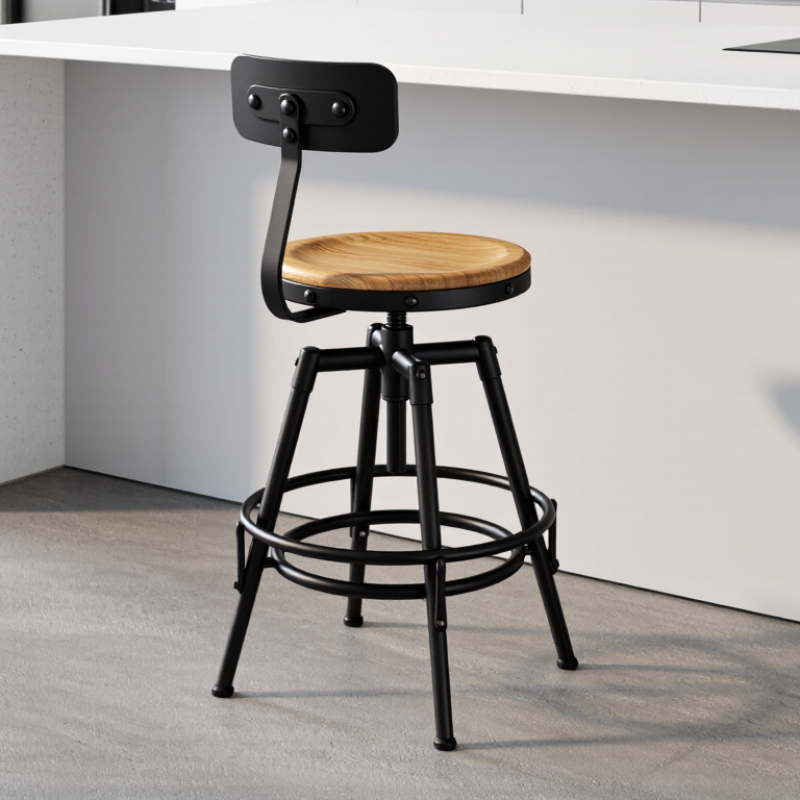
An industrial counter stool should begin with the correct height, not its appearance. Most kitchen counters measure 34 to 36 inches high. A seat around 24 to 26 inches usually leaves comfortable legroom. Measure your counter before ordering. A beautiful stool can still feel wrong when your knees touch the underside.
Material quality shapes daily performance. Look for a steel frame with clean welds and balanced joints. Powder-coated finishes can resist scratches better than thin painted surfaces. Solid wood seats add warmth, but inspect the grain, edges, and protective coating. A footrest should feel stable under pressure. I have found that narrow footrests become uncomfortable during long meals. A wide, smoothly finished bar works better.
Comfort depends on more than padding. A slightly curved seat supports the body without trapping movement. Backrests help during extended sitting, while backless designs slide neatly under counters. Swivel mechanisms may improve access, but they also introduce parts that can loosen. Check the base, fasteners, and weight rating carefully. A heavier frame is not automatically stronger. That assumption deserves reconsideration. Ask for tested load information and clear maintenance guidance from the seller. Small rubber glides also matter. They reduce floor marks and prevent irritating movement on tile.
Accurate measuring should guide your stool choice. Do not trust a counter’s advertised height alone. Measure from the finished floor to the underside of the counter. A standard counter often measures 34 to 36 inches high. For comfortable use, choose a seat about 24 to 27 inches high. Leave roughly 9 to 12 inches between the seat and counter underside.
Check the counter’s apron, drawers, and support brackets. These parts can reduce legroom, even when the height seems correct. A stool with a 16 to 19-inch seat width usually fits well in compact kitchens. Allow at least 6 inches between neighboring stools. More space helps when the stool has arms or a swivel base. Test the reach before ordering. Sit with both feet flat on the footrest, then check whether your knees touch the counter.
Industrial stools often combine steel frames, wooden seats, and exposed hardware.
These materials can feel durable, but welded joints and sharp edges deserve careful inspection. I once measured only the counter surface and chose a seat that felt too high because of a thick underside frame. That mistake changed my process. Now, I measure three points and use the smallest clearance. A cardboard seat mock-up also reveals awkward posture quickly. Comfort is subjective, so one measurement cannot decide everything. Reflect on how the stool will be used daily, not just how attractive it looks.
Material choice affects comfort, stability, maintenance, and service life. Steel frames usually provide strong support for busy kitchens, workshops, and commercial counters. However, heavy steel can make frequent repositioning frustrating. Aluminum feels lighter and resists corrosion, but it may flex under demanding use if poorly engineered. Solid wood adds warmth and tactile comfort. It needs careful sealing near sinks or humid areas.
Finish quality matters as much as the base material. Powder coating can create a tough, even surface that handles regular contact and minor impacts. Look closely at corners, welds, and the underside, where coating may be thinner. Plated finishes can look refined, yet scratches may expose the underlying metal. A textured finish hides fingerprints better, but dust can collect inside its pattern. No finish stays perfect.
Tips: Test the stool before purchasing. Sit for ten minutes, check frame movement, and inspect the footrest height. Choose capped feet for hard floors, but confirm they can be replaced. In my experience, replaceable glides often extend practical service life more than decorative upgrades. Check the rated load, fasteners, and warranty terms. A beautiful stool with loose joints becomes expensive quickly. I once preferred a lighter frame, then regretted it after repeated daily use. Durability is not only material strength; it is repair access, finish resilience, and sensible maintenance.
How to Choose the Best Industrial Counter Stool in 2026?
Evaluating Comfort, Stability, and Workplace Safety
An industrial counter stool should support the worker, not create another source of fatigue. Measure the counter height before selecting the seat. A practical gap of about 25 to 30 centimetres between the seat and counter usually allows comfortable leg movement. However, body size and task requirements can change that experience. A foot ring can reduce pressure on the lower legs during longer shifts. Padded seats may feel comfortable, but dense, durable materials often perform better in busy work areas.
Stability deserves careful, hands-on checking. Inspect the base, welds, joints, and floor glides for uneven movement. Sit down slowly and shift your weight from side to side. Does the stool wobble? It should not. Four legs may offer dependable support, while a central pedestal can provide easier movement. The better choice depends on the floor surface and daily workflow. Follow the manufacturer’s stated load limits and inspection guidance.
Workplace safety includes more than preventing falls. Rounded edges can reduce painful contact with work clothing or moving equipment. Non-slip feet help protect smooth floors, though they can collect dust and lose grip over time. Cleanability also matters near food, chemicals, or fine materials. I once preferred a heavier stool because it felt more secure, but moving it repeatedly caused unnecessary strain. That choice needed more thought. Test several stools with real users, real tasks, and realistic shift lengths before approving one.
Practical selection benchmarks for workshops, laboratories, production areas, retail counters, and commercial workspaces
| Evaluation dimension | Recommended benchmark | Preferred specification | Verification method | Workplace benefit |
|---|---|---|---|---|
| Seat height | 24–27 in (61–69 cm) | Adjustable height when multiple users or work surfaces are involved | Measure from the floor to the highest point of the compressed seat | Supports normal counter-height surfaces while helping users keep their feet supported |
| Seat width and depth | Width: 15–18 in (38–46 cm); depth: 14–17 in (36–43 cm) | Contoured or slightly rounded front edge without sharp pressure points | Measure usable seating area, excluding back supports or side bolsters | Provides adequate support without restricting movement in compact work areas |
| Seat cushioning | Cushion thickness: approximately 2–3 in (5–8 cm) | Firm, resilient foam with a durable, cleanable cover | Sit for at least 15 minutes and check for pressure at the thighs and sit bones | Reduces discomfort during inspections, assembly, laboratory, and service tasks |
| Back support | Backrest height: approximately 8–12 in (20–30 cm) above the seat | Lumbar-contoured back with a slight recline and no exposed hard edges | Check whether the backrest supports the lower and mid-back without forcing a forward lean | Improves posture for seated tasks lasting longer than short-duration use |
| Foot support | Continuous foot ring or stable footrest positioned below the seat | Footrest diameter or usable width of at least 1 in (2.5 cm), with a non-slip surface | Place both feet on the support and confirm that knees remain near a right angle | Reduces dangling legs, pressure behind the knees, and unstable sitting posture |
| Base stability | Wide five-leg base or weighted pedestal with a low center of gravity | Base footprint approximately 18–22 in (46–56 cm), depending on the seat height | Apply controlled forward, side, and rearward loads; the stool should not rock, slide, or tip | Lowers the risk of falls when users reach, turn, or transfer onto the stool |
| Load capacity | Select a rated capacity at least 25% above the maximum expected user weight | Prefer a clearly documented static and functional load rating | Review the manufacturer’s test documentation and compare it with the actual workplace load | Creates a practical safety margin for clothing, tools, movement, and repeated use |
| Frame and joint strength | Reinforced welded or mechanically secured joints with no visible movement | Steel or similarly durable frame with corrosion-resistant coating for industrial environments | Inspect welds, fasteners, joints, and connecting points after repeated rocking and rotation | Improves service life and reduces failures caused by vibration or frequent repositioning |
| Caster and gliding system | Use casters only when mobility is necessary; otherwise choose fixed glides | Locking casters or load-rated glides matched to the floor surface | Check rolling resistance, brake engagement, and movement on the actual floor material | Balances mobility with control and helps prevent unexpected movement during work |
| Surface and edge safety | No sharp edges, exposed burrs, pinch points, or protruding fasteners | Rounded seat and frame edges with smooth, sealed surfaces | Perform a visual and hand inspection around the seat, frame, footrest, and adjustment mechanism | Reduces snagging, cuts, bruising, and clothing damage |
| Height-adjustment safety | Adjustment mechanism should lock securely at every usable height | Protected gas lift or mechanical adjustment with an accessible but guarded control | Raise, lower, and lock the seat repeatedly while checking for drift or sudden release | Prevents unexpected seat movement and supports correct ergonomic positioning |
| Cleaning and chemical resistance | Non-porous, wipe-clean surfaces for routine workplace contamination | Cover and coating compatible with the cleaning agents used on site | Review material-care instructions and test a small hidden area with the approved cleaner | Supports hygiene, appearance, and long-term material performance |
| Applicable testing reference | Look for documented commercial seating tests where available | Testing aligned with ANSI/BIFMA seating standards or equivalent regional requirements | Request the test scope, load rating, and date of evaluation rather than relying only on a label | Provides a more consistent basis for comparing durability and stability |
How to Choose the Best Industrial Counter Stool in 2026?
Balancing Style, Maintenance, and Overall Purchase Value
Choosing an industrial counter stool requires more than matching a metal frame to a kitchen island. The stool should support daily movement, resist spills, and remain comfortable during long meals. I inspect the welds, footrest joints, and seat edges before considering appearance. A slightly textured powder-coated frame usually hides fingerprints better than a glossy finish. That small detail matters in busy homes and commercial spaces.
Seat material changes maintenance demands. Solid wood offers warmth, but it needs prompt drying after spills. Molded polymer wipes clean quickly and tolerates heavier use. Upholstery can feel more comfortable, yet crumbs and moisture often collect around its seams. Check the underside carefully. Poorly finished edges may scratch flooring or loosen after repeated movement. A rubber floor glide is useful, but cheap glides can flatten quickly.
Purchase value depends on the full ownership cost. Compare warranty terms, replacement parts, cleaning needs, and expected daily use. A lower-priced stool may become expensive after unstable joints require repair. I once chose a visually striking stool with a narrow footrest. It looked excellent, but guests avoided it after twenty minutes. That mistake changed my priorities. Test the seat height, footrest position, and back support in person when possible. Leave room for maintenance, not just style.
Balancing style, maintenance, durability, and overall purchase value
The chart uses a transparent 1–5 benchmark scale based on commonly documented material characteristics. Higher scores indicate stronger performance. Maintenance ease and durability are weighted most heavily because they have the greatest effect on long-term ownership value. Powder-coated steel and stainless steel are strong choices for demanding commercial environments, while solid wood offers the highest style flexibility.
*$250 Off/Window $500 Off/Door. Minimum of 4 Windows. Max savings not to exceed $2,500. Must present coupon at time of estimate. Some restrictions apply. Cannot be combined with any other offers. Call or see the website for details. www.mpwindowsanddoors.com. Offer Expires 9/30/25. CSLB# 778326. 100% Employee Owned.
Contractor's License CSLB #778326.
© 2000 - 2025 American Vision Windows