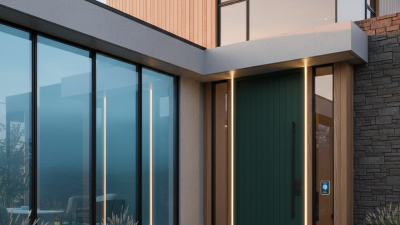
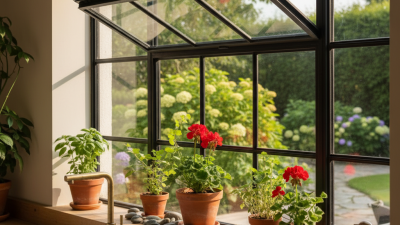
China Top French Windows Manufacturers for Global Buyers
China has become a significant source of french windows for international construction projects, renovation programs, and private residences. Its manufacturers now offer slim aluminum profiles, thermal-break systems, double glazing, and custom opening configurations. However, a polished catalog does not prove dependable performance. The frame may look elegant, yet poor drainage or weak hardware can create problems after installation.
Building-science expert Joseph Lstiburek often stresses, “Water is the enemy.” This short warning matters when evaluating french windows. Buyers should examine drainage channels, corner joints, gasket quality, glass specifications, and resistance to wind and rain. Reliable factories should provide test reports, material declarations, production photographs, and clear warranty terms. Factory experience also matters. A supplier producing thousands of standard units may struggle with unusual dimensions or coastal corrosion requirements.
This guide introduces leading China french windows manufacturers for global buyers. It considers design capability, engineering support, quality control, customization, export experience, and communication. Some companies excel in luxury finishes. Others provide stronger value for large developments. A few may offer impressive samples but lack consistent after-sales support. That difference deserves attention.
The evaluation is not perfect. Product data can change, and showroom samples may not represent every shipment. Buyers should request recent evidence and inspect critical details independently. In practical terms, compare profile thickness, hardware brands, glass performance, packaging methods, and installation guidance. Also confirm whether the quotation includes screens, hardware, testing, and delivery protection. A lower price is not always a lower total cost. Careful sourcing can turn attractive french windows into a durable, comfortable, and credible building solution.
French Window Scope: EN 14351-1, Glazing Types, and Opening Configurations
For global buyers, French windows are more than a two-sash design. EN 14351-1:2006+A2:2016 covers windows and external pedestrian doorsets. It addresses air permeability, watertightness, wind resistance, acoustic performance, and thermal transmittance. Buyers should request test reports, factory quality records, and product declarations. CE marking may apply under destination-market rules. The standard alone does not guarantee suitable performance.
Glazing selection changes both comfort and risk. Double glazing usually balances cost and insulation. Triple glazing can reduce heat transfer, but it adds weight and demands stronger hardware. Low-E coatings improve thermal performance, while laminated glass supports safety and noise control. Tempered glass resists thermal shock, yet it still needs correct edge processing. The IEA Buildings 2023 report states that buildings consume about 30% of global final energy and create around 26% of energy-related emissions. Window specifications therefore deserve serious attention.
Opening configuration affects weather resistance and daily use. Casement French windows can provide wide ventilation and clear sightlines. Tilt-and-turn systems offer controlled airflow during rain. Outward-opening leaves may suit limited interior space, but wind exposure needs calculation. Inward-opening leaves simplify cleaning. Small details matter. Check hinge load, drainage paths, gasket compression, and handle height. The drawing is rarely perfect. A practical review should compare opening size, local wind data, glazing weight, and installation tolerances before production. Industry reports provide useful benchmarks, but project conditions remain decisive.
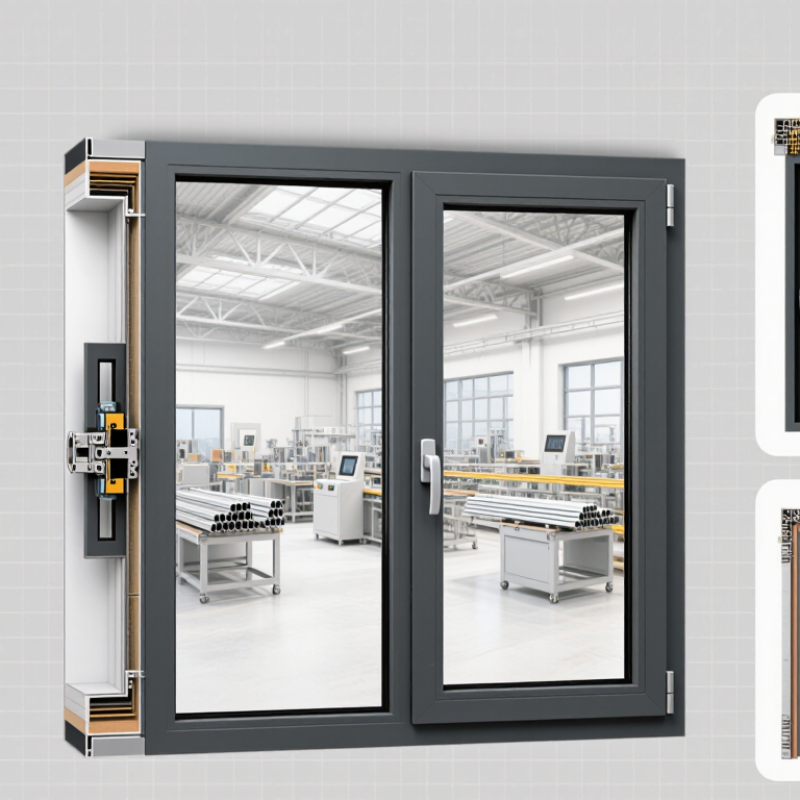
EN 14351-1 covers windows and external pedestrian doorsets, including fixed, casement, tilt-turn, and sliding opening configurations.
The chart compares common glazing constructions by the number of glass panes: single, double, and triple glazing.
Fire and smoke control doorsets, internal doorsets, and curtain walling are outside this window product scope.
Thermal Benchmarks: U-Values Below 1.4 W/m²K Under EN ISO 10077-1
For global buyers, French window manufacturers must prove more than attractive profiles and smooth hardware. A key benchmark is a whole-window U-value below 1.4 W/m²K, calculated under EN ISO 10077-1. This standard evaluates heat transfer through the frame, glazing, and edge zones. It helps buyers compare products using a consistent technical method.
The frame matters greatly. Thermally broken aluminium sections, insulated chambers, and low-conductivity spacers can reduce heat loss around the glass. Double glazing may achieve the target in moderate climates, while triple glazing often provides more design flexibility. However, the stated Uw value depends on window size, glass specification, spacer type, and opening configuration. Small samples can look better than full-size units. Real projects are rarely so simple.
Ask manufacturers for calculation sheets, declared Uf and Ug values, and test or assessment records from competent laboratories. Check the exact dimensions used for the reported result. Installation also changes performance; a poorly sealed perimeter can undermine an excellent factory calculation. Air leakage, drainage details, and frame-to-wall interfaces deserve equal attention. A low number alone is not enough. I have seen specifications that appeared impressive until the spacer and installation assumptions were examined. Buyers should question optimistic figures, request project references, and compare thermal results with condensation resistance. The calculation is useful, but it is not the whole building.
China Top French Windows Manufacturers for Global Buyers - Thermal Benchmarks: U-Values Below 1.4 W/m²K Under EN ISO 10077-1
Comparative, non-brand-specific reference configurations for evaluating French window systems. The listed whole-window U-values are indicative calculated benchmarks based on EN ISO 10077-1 methodology and should be confirmed by project-specific calculations or certified test reports.
| Reference Configuration |
Frame Material |
Frame Thermal Transmittance
(Uf, W/m²K) |
Glazing Build-Up |
Centre-Glass U-Value
(Ug, W/m²K) |
Warm-Edge Spacer
(Ψg, W/mK) |
Calculated Window U-Value
(Uw, W/m²K) |
Solar Factor
(g-Value) |
Indicative Acoustic Rating
(Rw, dB) |
Thermal Benchmark |
| A — Standard high-performance casement |
Thermally broken aluminium |
1.60 |
Double low-e insulating glass, 4-16Ar-4, argon filled |
1.10 |
0.035 |
1.30 |
0. Fifty? |
31–34 |
Below 1.4 |
| B — Enhanced casement with optimized spacer |
Thermally broken aluminium |
1.40 |
Double low-e insulating glass, 4-18Ar-4, argon filled |
1.00 |
0.030 |
1.20 |
0. Fifty? |
32–35 |
Below 1.4 |
| C — Premium timber-aluminium casement |
Timber interior with external aluminium cladding |
1.20 |
Double low-e insulating glass, 4-18Ar-4, argon filled |
1.00 |
0.030 |
1.15 |
0. Fifty? |
34–38 |
Below 1.4 |
| D — Triple-glazed energy-efficiency casement |
Thermally broken aluminium |
1.20 |
Triple low-e insulating glass, 4-14Ar-4-14Ar-4 |
0.60 |
0.030 |
0.90 |
0. Fifty? |
35–40 |
Below 1.4 |
| E — High-insulation uPVC casement |
Multi-chamber uPVC with steel or composite reinforcement |
1.10 |
Triple low-e insulating glass, 4-16Ar-4-16Ar-4 |
0.60 |
0.030 |
0.85 |
0. Fifty? |
34–39 |
Below 1.4 |
Technical notes:
Uw is the calculated thermal transmittance of the complete window, including the frame, glazing and glazing-edge effects. Under EN ISO 10077-1, the result depends on window dimensions, frame area, glazing area, frame Uf, glass Ug and the linear thermal transmittance of the glazing spacer. Actual values vary with opening size, profile reinforcement, hardware, installation conditions and glass specification. Solar-factor values are typically about 0.45–0.55 for clear low-e double glazing and about 0.35–0.50 for many solar-control or triple-glazed configurations; they should be confirmed using the selected glass manufacturer’s data.
Top Chinese Manufacturers: ISO 9001, CE Marking, and Export Capacity
China Top French Windows Manufacturers for Global Buyers
Chinese French window manufacturers increasingly compete through documented quality systems, verified testing, and reliable export operations. The ISO Survey 2022 recorded 1,265,216 valid ISO 9001 certificates worldwide, including 426,716 in China. This figure shows broad adoption, but certification alone does not guarantee excellent windows. Buyers should request the certificate scope, audit status, and factory production records.
CE marking deserves careful attention.
It is a manufacturer’s declaration of conformity, not a universal quality award. For European projects, suppliers should provide applicable performance evidence for air permeability, watertightness, wind resistance, thermal insulation, and safety glass. The European Commission’s Blue Guide explains that technical documentation must support the declared performance. Paperwork must match the actual model.
Export capacity requires more than a polished website.
The 2023 World Bank Logistics Performance Index ranked China 19th among 139 economies, reflecting strong trade infrastructure. Buyers should still inspect packing methods, container loading photos, lead-time records, and replacement procedures. Ask for recent test reports, not only old files. A certificate can age. Numbers need checking. A factory may pass an audit yet struggle with custom profiles, coastal corrosion, or installation tolerances. Independent inspection before shipment remains a practical safeguard for global buyers.
Quality Verification: Air, Water, and Wind Tests Under ASTM E283 and E330
For global buyers sourcing French windows from China, verification should begin with measured performance, not attractive catalog images. ASTM E283 measures air leakage through the assembled window. Technicians mount the unit inside a calibrated chamber and create pressure differences across the frame. Airflow is then recorded and converted into a leakage rate. Small gaps around sash seals often become visible during testing. That detail matters. Test records should show specimen size, pressure, leakage result, and test conditions. Without these details, comparison becomes uncertain.
ASTM E330 evaluates structural performance under uniform static air pressure. The window faces positive and negative pressure cycles, representing changing wind directions. Inspectors check frame deflection, glass movement, hardware failure, and permanent damage. Water resistance needs separate evidence, usually through an applicable water penetration procedure. Air and structural results cannot prove drainage performance. In practical reviews, I have seen buyers focus on peak pressure while overlooking installation tolerances. That was too narrow. A passing laboratory result may still fail after poor anchoring or incorrect sealing. Buyers should request complete reports, calibration information, installation photographs, and any observed failures before approving production. The installation detail remains the uncomfortable part.